
Raiding
Guide to Raiding Tools in Rust
C4, rockets, satchels, HV rockets, battle rams, propane tanks, beancan grenades, and explosive ammo. Costs and when to use each.
C4, rockets, satchels, HV rockets, battle rams, propane tanks, beancan grenades, and explosive ammo. Costs and when to use each.
Every raid starts with the right tools. Understanding what each explosive does, what it costs, and when to use it determines raiding success. No single explosive is universally best. Context, target material, and your crafting resources determine the optimal loadout.
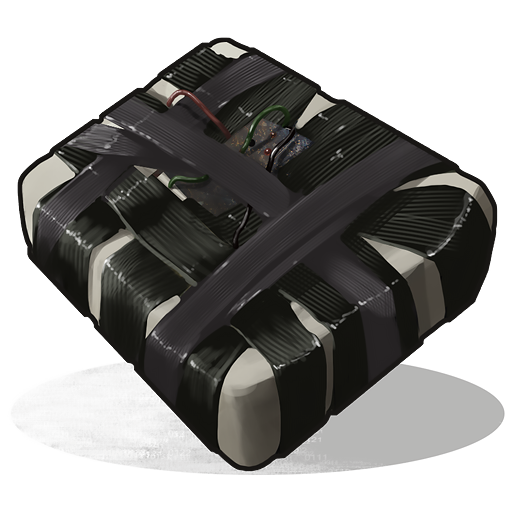
C4 is the most reliable raiding tool. Throw it on a structure and it sticks reliably. After 10 seconds, it detonates and deals 275 damage to stone and metal walls (see building tiers for material health values). C4 does not dud, does not bounce off structures, and has guaranteed damage every time. The 10-second timer is the main disadvantage on online raids, as it gives defenders time to react and push you out.
One C4 destroys a sheet metal door. Two C4 destroy a stone wall. C4 excels on precise targets where you know exactly what needs to be destroyed. Crafting cost is approximately 2,200 sulfur total per C4 when accounting for the full chain (explosives, cloth, tech trash).
Use C4 when you need guaranteed destruction and timing is not critical, or when you can work offline without defender interference.
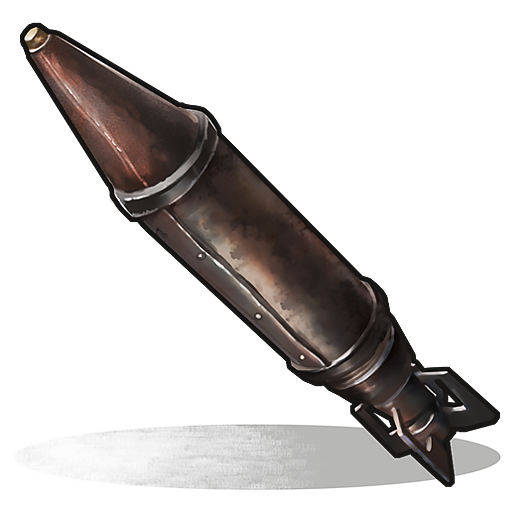
Rockets are fired from a Rocket Launcher and deal area damage on impact. A regular rocket deals 137 damage per hit to stone and metal walls and damages all structures in a small radius around impact. This makes rockets efficient when you can hit multiple walls simultaneously through splash damage, particularly in tight base corners.
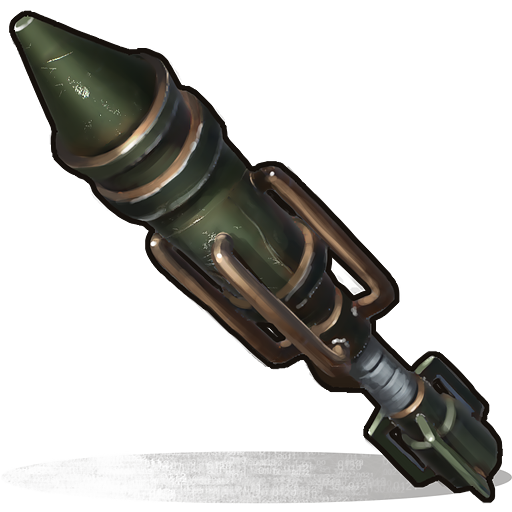 High Velocity rockets (HV rockets) deal only 75 damage to structures, making them useless for raiding structures. HV rockets are for PvP against players and destroying vehicles. Do not waste them on walls.
Rockets cost approximately 1,400 sulfur per rocket. They are more expensive than C4 but shine in bases with many walls in tight proximity where one rocket damages multiple walls. Rockets also work well on frozen frames and on bases where precise placement is less critical.
Use rockets on compound walls, on bases with multiple walls close together, or when you have heavy firepower to suppress defenders.
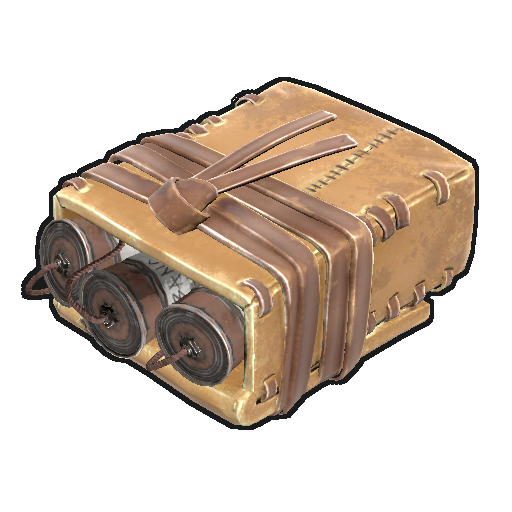
Satchels are the cheapest craftable explosive, costing only approximately 480 sulfur per charge. They can be crafted at Tier 1 workbench with no research table requirement. The downside is reliability. Satchels have a chance to dud on detonation and fail to explode. Failed satchels must be picked up and rethrown, wasting time.
Satchels deal less damage than C4, so you need more of them for the same result. They are the early-wipe raiding option when you cannot yet craft C4 or rockets. On online raids, use satchels with caution because the dud chance can cost you the raid.
Use satchels for early-wipe raiding, for destroying wood and soft structures when cost matters more than reliability, or for offline raids where duds are less catastrophic.
Explosive 5.56 rounds deal small splash damage to structures. They are fired from an assault rifle and cost significant ammunition to deal meaningful damage. They are useful for chipping down wood and sheet metal structures or for breaking windows and barricades from range.
Explosive ammo is not used for primary wall breaches due to cost relative to damage. Their niche is softening structures through splash damage when you want to avoid the noise and visibility of rockets, or for shooting through window bars to damage the structure beyond.
Use explosive ammo as a supplementary tool, not as your primary raiding explosive.
The battle ram is a deployable structure that charges forward and deals significant melee damage to doors and walls. It is cheap to craft and effective against wood and stone structures. The damage and speed make it a legitimate eco-raiding tool, especially for early-wipe raids on twig and wood bases where explosives are overkill.
Hatchets and pickaxes also deal soft-side damage effectively. A spear can reach soft sides through windows, hitting soft sides without entering the structure. Use melee tools on soft sides to save explosives entirely on outer walls.
Use melee tools for early-wipe raiding, for eco-raiding soft sides of stone walls, and for offline raids on wood structures where time is not critical.
Propane tanks can be picked up, thrown, and detonated with gunfire for area damage. They damage structures on explosion and are occasionally used to supplement an explosive raid or damage external barricades. Propane tanks are heavy and cumbersome, making them niche for specialized situations.
Use propane tanks only in creative situations where you need area damage and cannot access standard explosives, or for breaking through barricades and external structures.
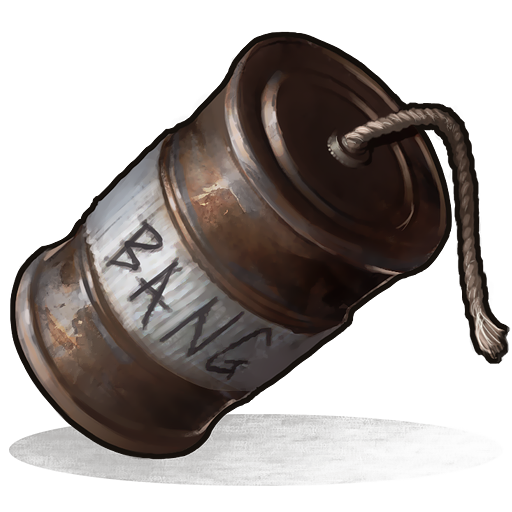
Beancan grenades are cheap throwable explosives that deal moderate structure damage. Like satchels, they can dud. They are craftable at Workbench Level 1 and useful for supplementing a satchel raid or dealing with lower-tier structures early wipe.
Use beancan grenades for early-wipe raiding when explosives are scarce, for supplementing satchel raids, or for destroying furniture and low-tier structures.
Early wipe (first 3 days): Use satchels and beancan grenades on wood/stone bases. Combine with soft-side eco raiding where possible.
Mid-wipe (days 4-10): Use C4 as primary explosive. Supplement with rockets on compound walls. Use satchels on easy targets to preserve C4.
Late-wipe: Use rockets on large bases. Use C4 for precise door destruction. Have enough explosives that cost is not a limiting factor.
For tactical raiding strategy, see the efficient raiding guide. For defense perspective, read raid defense fundamentals. For waterside raiding, check the torpedo raiding guide. Use weapon comparison tool to optimize your raid loadout.
Always bring 20 percent more explosives than your calculations show. Mistakes, missed shots, and unexpected honeycombing happen. Extra explosives prevent a raid from failing halfway through.