
Building
Doors and Locks
Every door type, their raid costs compared, and how to lock down your entrance properly.
Every door type, their raid costs compared, and how to lock down your entrance properly.
A base without locks is open to anyone. Doors and locks are cheap and should go down before anything else. You can have a twig base with sheet metal doors and code locks and be more secure than a full stone base with wood doors and no locks. Understanding building tiers helps you prioritize which components to upgrade first.
You will use four main door types: wood, sheet metal, garage doors, and armoured. Each has specific use cases and raid costs. Choose the right door for the position it defends.
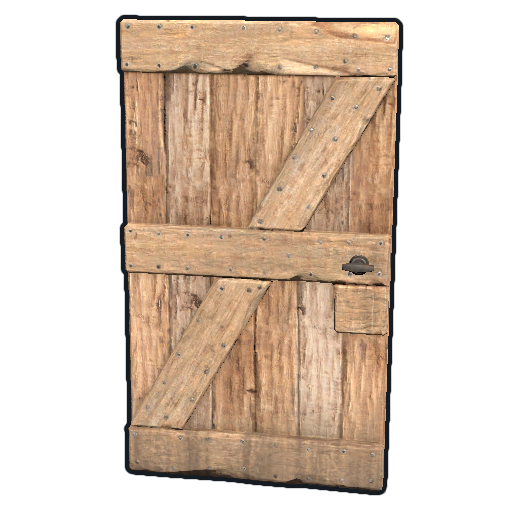 Wood Door (200 wood). The earliest-game door. Acceptable at the very start of a wipe when most players have no explosives. Vulnerable to satchels, beancans, shotgun shells, and fire. If someone wants in, a wood door is not stopping them. Replace with sheet metal as soon as metal fragments become available, by day 2 or 3 at the latest.
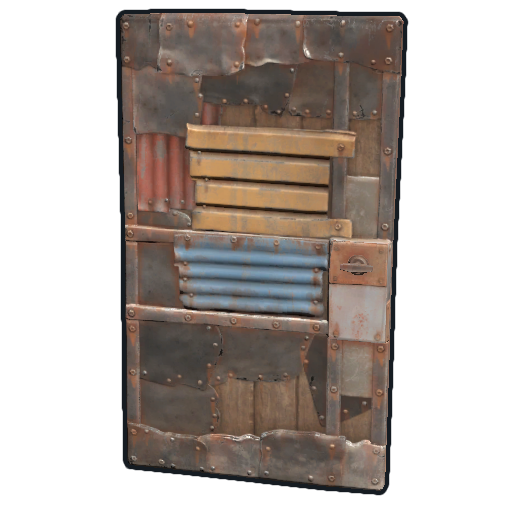 Sheet Metal Door (150 metal fragments). The standard door for 80 percent of the wipe. Significantly tougher than wood. Requires explosives to raid properly. Get both airlock doors to sheet metal before anything else. This is your most important early-game upgrade after the airlock is built.
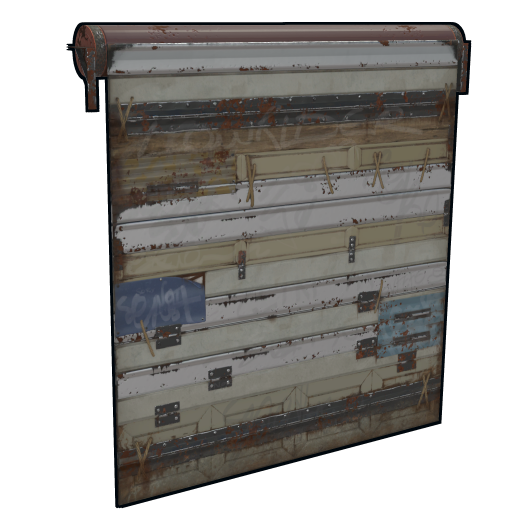 Garage Door (300 metal fragments). Rolls up vertically instead of swinging. Has no gap when closed. Commonly used as an outer defensive layer on main entrances or for vehicle storage. Requires a dedicated garage door frame instead of a standard door frame. Costs 9 satchels to destroy, roughly 2x a sheet metal door but less than armoured.
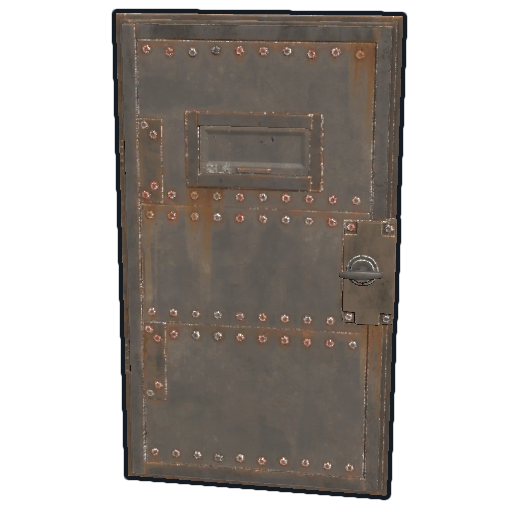 Armoured Door (5 gears + 20 HQM). The toughest door in the game. Costs 12 satchels to destroy. Only worth it on your TC room door and innermost loot room once you have HQM to spare. Most players use armoured doors very sparingly because the HQM cost is high.
| Door Type | Health | Satchels | Rockets | C4 |
|---|---|---|---|---|
| Wood Door | 200 | 2 | 1 | 1 |
| Sheet Metal Door | 250 | 4 | 1 | 1 |
| Garage Door | 600 | 9 | 3 | 2 |
| Armoured Door | 800 | 12 | 3 | 2 |
A stone wall costs 10 satchels to destroy. A sheet metal door costs 4. Raiders always try doors first because they are the cheapest entry. This is why upgrading walls matters more than upgrading doors. See the building tiers guide for wall upgrade priority.
A door without a lock can be opened by anyone. After placing a door frame, immediately add a lock before walking away. The five-minute window after placement is when most people forget.
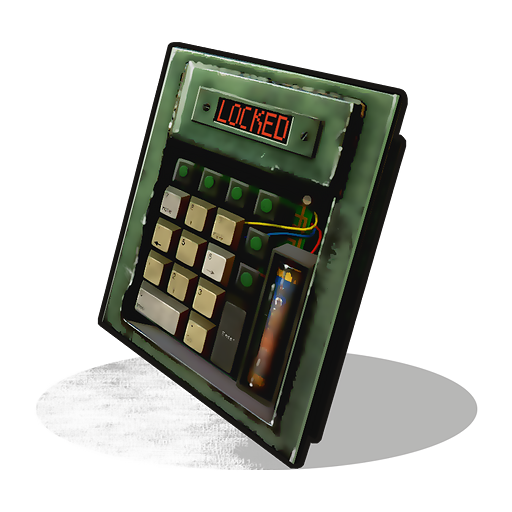 Code Lock (100 metal fragments). Set a 4-digit code. Anyone who knows the code can open the door. Share the code with teammates only. You can also set a guest code for temporary access without giving the main code. Change the code immediately if you suspect it has been compromised. This is the standard lock type for group bases.
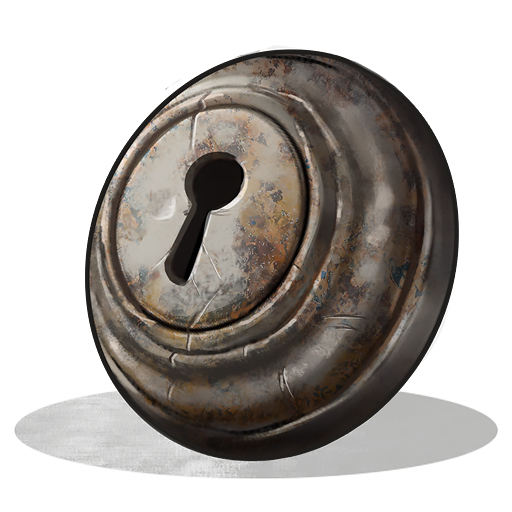 Key Lock (75 wood). Creates a physical key that must be crafted. If someone loots the key from your body, they can enter your base. Key locks are slower to use than code locks. Avoid them on important doors. Only use key locks on internal doors where losing the key is not catastrophic.
An unlocked door is an open door. The moment you place a door, add a code lock before you do anything else. Take three seconds to do this every single time. Forgetting to lock a door has cost more bases than any raid tactic.
When you place a door, it opens toward whoever placed it. An inner door placed from inside the base swings inward. This determines whether the open door blocks a hallway or leaves a gap for grenades.
You have five minutes after placing a door to pick it up and re-place it to change the hinge direction. Door frames can be rotated with a hammer at any tier. If a door opens the wrong direction, fix it before the window closes. After five minutes, you must destroy the door and frame to change orientation.
For an airlock, hinge direction is the entire mechanism. See the airlock guide for detailed hinge direction strategy and how to use it deliberately for defense.
Upgrade doors in this order: Airlock doors first. Both of them to sheet metal as soon as possible. They are the first thing a raider encounters and wood doors on an airlock are an easy entry point for anyone with a handful of satchels.
TC room door second. If a raider gets through your airlock and interior defenses without fully raiding, they will find your TC room. An armoured door here is worth the HQM investment later in the wipe when you have resources to spare.
Internal base doors last. Doors between rooms inside the base can stay at sheet metal for most of the wipe. They are less critical than doors that face the outside.
See the principles of building guide for overall base defense strategy and the building tiers guide for wall upgrade prioritization.
Doors are the cheapest entry point into a base. This is strategic reality. A stone wall costs 10 satchels to raid. A sheet metal door costs 4. Raiders optimize for cost, so they always try doors before walls.
Your defensive strategy should account for this. Upgrade your walls before your doors. A full stone base with wood doors is better defended than a full twig base with armoured doors. The walls are what actually slows raids. Doors are just the final access point.
That said, an open door (no lock) is worse than no door. Always use code locks. Always upgrade airlock doors to sheet metal quickly. These are the bottom-line requirements.