Building
Advanced Building
Honeycombing, bunkers, wall stacking, soft sides, compound walls, and shoot floors. Everything beyond the basics.
Honeycombing, bunkers, wall stacking, soft sides, compound walls, and shoot floors. Everything beyond the basics.
Advanced building techniques exploit game mechanics to create bases that are harder to raid, more efficient to maintain, and take advantage of mechanics most players overlook. This guide assumes you already understand basic building principles, tier upgrades, and airlock construction.
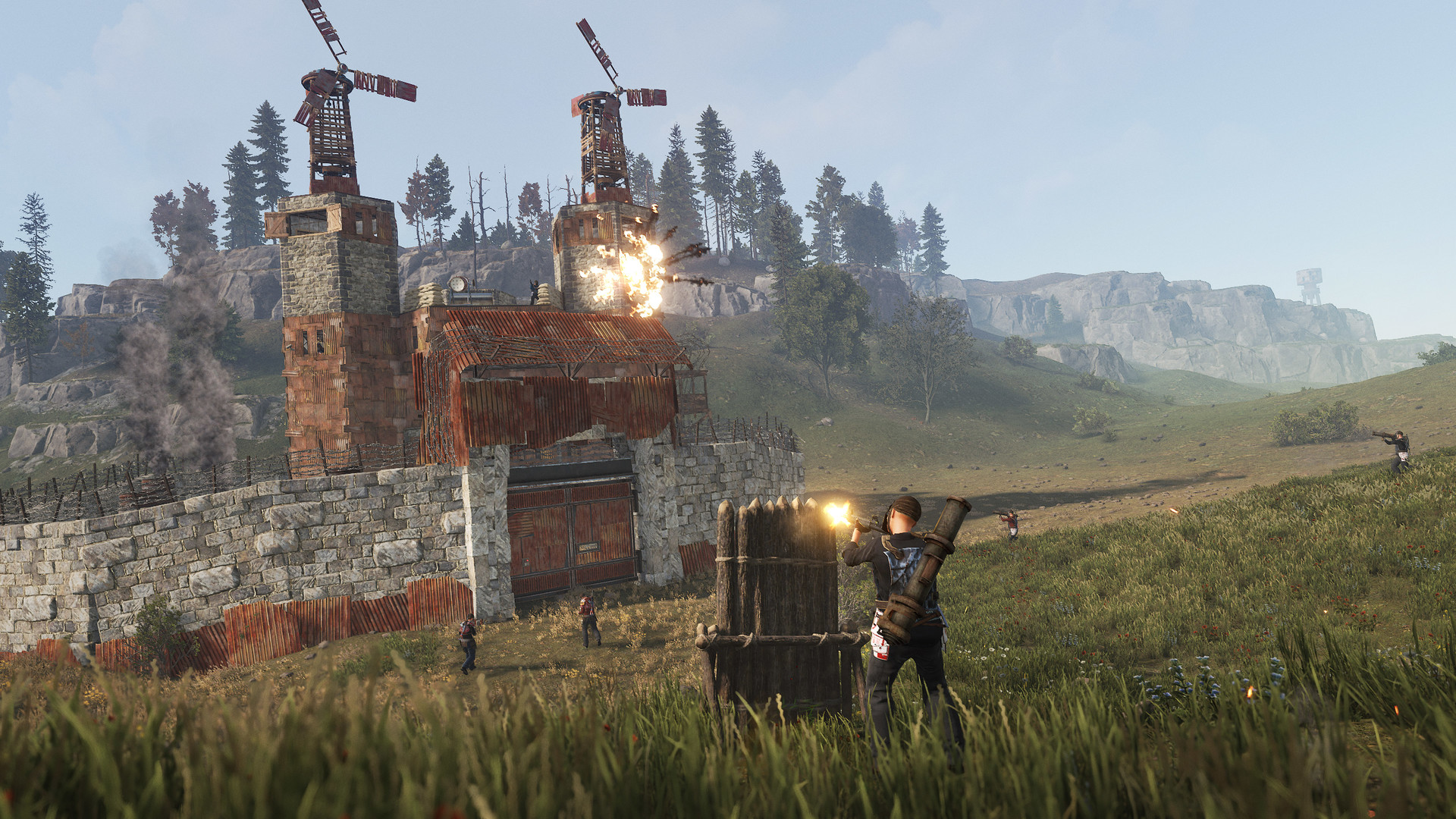
Honeycombing is building extra layers of empty walls around your core rooms. Instead of one wall separating the outside from your loot, you build two or three layers of walls that raiders must destroy before reaching anything valuable. These honeycomb walls serve no purpose except forcing raiders to spend more explosives.
Every stone honeycomb wall costs raiders 10 satchels. A 2x2 base with two layers of honeycomb means an attacker must destroy 3-4 walls minimum just to access your loot room. That is 30-40 satchels in explosives before counting doors. Without honeycomb, the same base can be raided with 15 satchels.
Honeycomb costs you upkeep resources and space. Explosives cost raiders gunpowder, which is far more valuable. This asymmetry is why honeycombing works. The defenders get a 2-3x advantage in raid cost by simply wasting space with extra walls.
Simple honeycomb strategy: Surround your base with triangle foundations on every exterior edge. Place walls on each triangle face. This creates a continuous buffer that forces raiders around your perimeter before reaching your actual base.
Plan honeycomb before placing foundations. Trying to add honeycomb after building your base wastes space and materials. Get the design right first, then build.
Bunkers use the stability system to create sealed rooms with no doors. You build a room, then seal it completely by removing the door frame and replacing it with a solid wall. Access your loot by temporarily removing and replacing the wall.
Since there is no door to blow through, a raider must destroy a wall instead. A sheet metal door costs 4 satchels. A stone wall costs 10. The gap is significant. For your most valuable items that you rarely access, a bunker is worth the inconvenience of removing and replacing walls every time you want your loot.
Bunker walls must be sealed perfectly with no entry points. Gaps, missing walls, or unstable pieces compromise the bunker. Test your bunker extensively before storing valuable items in it.
Roof bunkers use roof pieces as the sealable component. Place a roof on top of a room to seal it. Access the room by picking up or destroying the roof, grabbing items, and replacing it. Roof pieces are relatively cheap and seal from above, protecting loot from vertical raids.
Stacking multiple roof pieces creates layers of health. A single stone roof has 300 health. Two stacked means 600 health from above. This is more protection than a single stone wall. Roof bunkers work well for TC rooms and small vault areas.
Wall stacking exploits building configurations to place multiple walls effectively in the same space. By manipulating foundation placement, you can force raiders to break through two walls where they expect one. The simplest version uses offset foundations with walls on each set.
From outside, one wall is directly behind the other. From a raider's perspective, it looks like one wall. In reality, they are destroying two. Wall stacking significantly increases raid cost for minimal additional upkeep. Plan it during the design phase before placing foundations.
This technique requires careful planning and understanding of the building system. Experiment in creative mode before implementing on an actual wipe.
Stone walls have 500 health on the hard side but only 250 effective health on the soft side when damaged with melee tools. This 2x difference means interior walls are vulnerable if raiders access them from behind.
Design your base so that raiders must destroy walls from the hard side. Never leave soft sides exposed to raiders. Place internal walls on top of external walls so the hard side always faces out. Use sheet metal or armoured for walls that might be accessed from both directions, since they have no soft side weakness.
See the principles of building guide for detailed soft side mechanics.
High external stone walls let you build a perimeter compound around your base. These walls are 1 foundation high and block external access. Stone compound walls have 500 health and require explosives to breach.
A full compound adds a significant cost buffer before raiders even reach your base. Compounds also protect external deployables like furnaces, workbenches, and vehicle storage. You can safely site external farming and crafting inside a compound.
Place compound walls on foundations with tool cupboard coverage. Without TC coverage, other players can build next to your walls and use twig structures to climb over them. This defeats the entire purpose of a compound.
Shoot floors use floor grills and half walls to create positions where you can fire downward at raiders attacking your base while remaining protected. Peek downs are windows or gaps in upper floors giving line of sight to the ground level.
A raider at ground level trying to break your walls while you are shooting them from above is at a severe disadvantage. Build shooting positions on every level that covers likely raid paths. Use metal embrasures for defensive positions. Use floor grills to create openings with cover.
See the windows and shutters guide for defensive window types and embrasure placement.
Build upward instead of outward. A tall base uses fewer foundations and walls total than a sprawling compound. Vertical design is 30-40 percent cheaper to maintain in upkeep while offering similar or better defense. Stacking rooms vertically also makes it harder for raiders to navigate.
Vertical bases with multiple levels force raiders to deal with shoot floors, peek downs, and vertical progression challenges. Combined with upward-facing defenses, vertical design is highly effective.
Mistake one: Building advanced techniques without understanding the basics. Wall placement, TC protection, and upkeep calculation are still more important than fancy honeycombing.
Mistake two: Overcomplicating your design. A simple stone base with good honeycomb is better than a complex base with wall stacking and bunkers. Keep designs elegant and testable.
Mistake three: Not testing on twig before upgrading. Build your advanced design on twig first. Verify honeycomb spacing, bunker integrity, and roof stacking work correctly. Fixing mistakes on twig costs nothing compared to fixing them on stone.
Mistake four: Building larger than you can maintain. Advanced bases are expensive in upkeep. Calculate sustainability before committing to construction.
Mistake five: Ignoring raid defense in favor of aesthetics. Every block you place should serve a defensive purpose. Do not waste space on decoration at the expense of protection.
Use design software like Fortify to plan your base before placing a single foundation. Draw out your honeycomb, TC room, loot rooms, and defensive positions on paper or digitally. Verify that your TC has adequate protection, that your honeycomb creates sufficient delay, and that your upkeep is sustainable.
Calculate total building costs before starting. A 30-foundation base with honeycomb might cost 60,000 stone total. Your daily upkeep is 6,000 stone. Can you farm that? If not, build smaller.
Most advanced bases are team efforts. Solo players should focus on solid fundamentals rather than complex techniques. Advanced tactics are worthwhile when you have the resources and time to execute them properly.