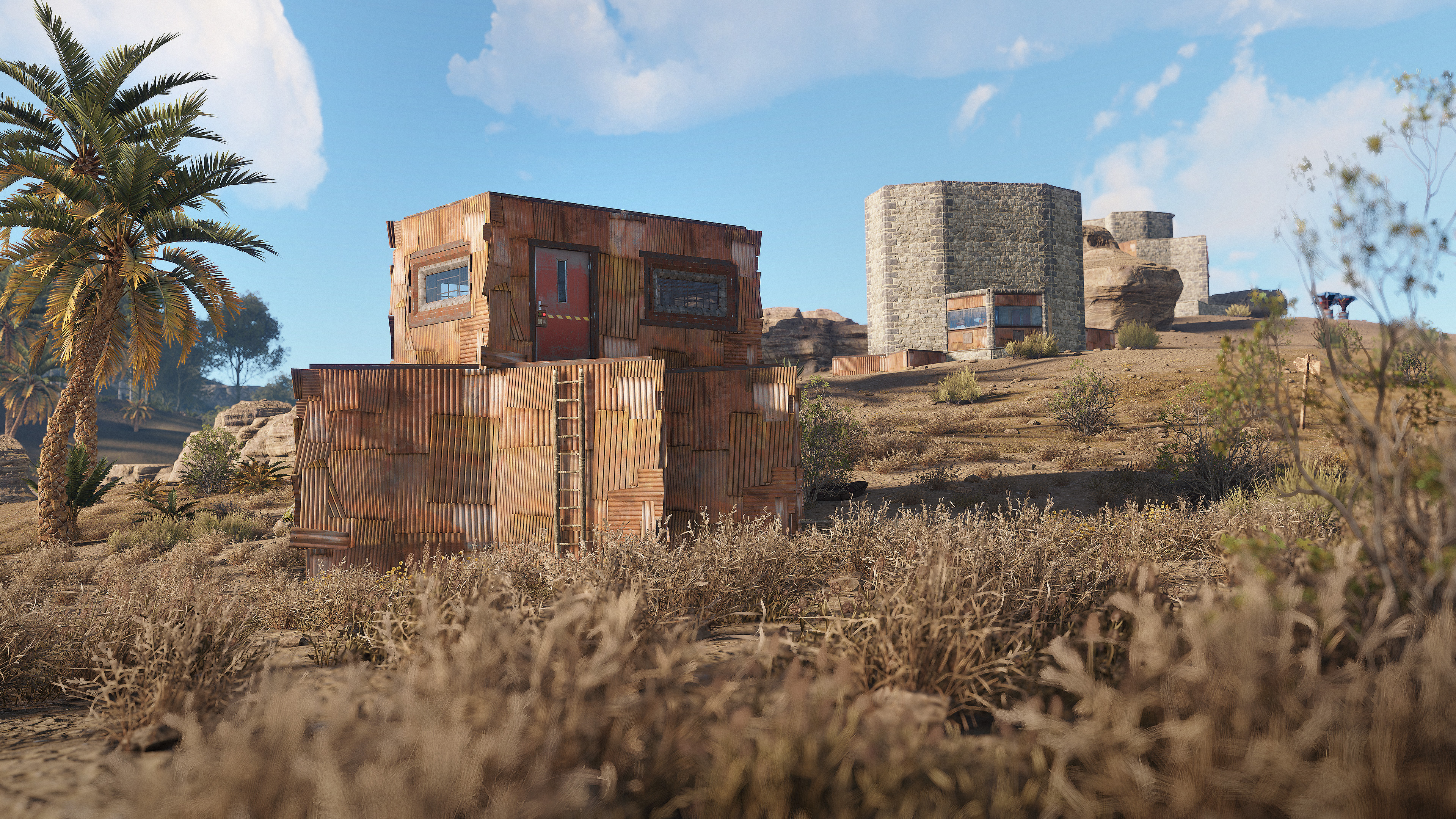
Master the mechanics that destroy bases when you are offline. Understanding decay is essential for base planning and offline protection.
Buildings in Rust decay when a Tool Cupboard (TC) loses upkeep. Every structure has a health pool and loses durability over time if the TC runs empty. Decay rates vary dramatically by building tier. Stone decays faster than sheet metal, and wood is destroyed almost instantly without upkeep. Decay happens in cycles every 10 minutes, with each tick removing health depending on material: Decay starts after 24 hours without player interaction and takes 12 hours to fully destroy an unoccupied structure. Different tiers decay at different rates based on their total decay time.
Your Tool Cupboard is the only thing stopping your base from turning to dust. Keep it stocked with resources and check it daily during your playtime. When the TC runs out of materials, decay accelerates across your entire claim radius.
| Building Tier | Material | Full Decay Time | Health Pool |
|---|---|---|---|
| Tier 0 | Twig | 1 hour | 10 HP |
| Tier 1 | Wood | 3 hours | 250 HP |
| Tier 2 | Stone | 5 hours | 500 HP |
| Tier 3 | Sheet Metal | 8 hours | 1,000 HP |
| Tier 4 | Armored | 12 hours | 2,000 HP |
Twig structures are destroyed in 1 hour without upkeep. Wood walls last 3 hours. Stone walls last 5 hours. Sheet metal survives 8 hours. Armored structures are the most durable at 12 hours before complete decay. These timers only matter if your TC has zero resources.
Your TC consumes resources continuously to prevent decay. The cupboard covers a claim radius of 64 meters. Everything within that radius is protected as long as it has materials. Upkeep costs are based on the original construction costs of your building, with the tool cupboard drawing about 1/10 of the building costs per real-time day.
Stone costs the least to maintain. Sheet metal costs significantly more. Armored is the most expensive per hour. Plan your base expansion carefully. A massive armored fortress burns through resources far faster than a small stone house.
| Example Base Size | Building Tier | Daily Cost | Weekly Cost |
|---|---|---|---|
| 2x2 Base | Stone | 3k Stone, 1k Wood, 200 Metal | 21k Stone, 7k Wood, 1.4k Metal |
| 4x4 Base | Stone/Metal Mix | 6k Stone, 2k Wood, 500 Metal | 42k Stone, 14k Wood, 3.5k Metal |
| Large Compound | Metal/Armored | 10k+ resources | 70k+ resources |
Always overstock your cupboard. If you play 6 hours daily, fill it with 2 to 3 times what you need. Server resets and unexpected offline time happen. Running out of materials is one of the worst ways to lose a base because decay is irreversible once started.
Dropped items on the ground have separate despawn timers. This is different from building decay. Items in bags, toolboxes, and storage containers last as long as the container survives. But items lying on floors or ground despawn based on their tier rarity.
Item despawn varies by tier. Tier 1 items (common, low-value): approximately 5 minutes. Tier 2 items (uncommon, moderate value): approximately 20 minutes. Tier 3 items (rare, high-value): approximately 60 minutes. Items in locked containers survive as long as the container remains intact. This is why storing everything in boxes matters for base security. Scattered items are lost forever if not picked up in time.
Authorized players on the TC keep all structures from decaying within the claim radius. The cupboard only requires that you have upkeep resources inside. Authorization costs nothing. Every player you trust with the TC gets full base access to prevent decay. See the upkeep calculator guide to plan costs for your specific base design.
Place multiple cupboards in large bases. A single cupboard can claim 64 meters radius, but complex compounds need overlapping coverage. Use the cupboard preview to see the exact claim area before placing it.
Your TC must be hard to reach. Raiders often destroy cupboards first to enable rapid decay on walls they cannot destroy through normal raiding. Protect your TC in a dedicated room with multiple doors and armor. Consider building a fake TC to distract raiders while your real one stays hidden.
Decay can be weaponized in raids. If raiders destroy your TC, your base begins decaying immediately. Walls within the cupboard radius will lose health rapidly. This is why TC location is critical. A well-placed cupboard should require extensive explosives to reach.
Smart base design puts the TC multiple layers deep inside the compound. Even if enemies penetrate the outer walls, they still need to navigate through several more doors to destroy the cupboard. Buying time lets defenders respond or logs you back online for active defense.
Some servers have raid block features that prevent cupboard destruction during specific hours. Check your server rules. On vanilla servers, protecting the TC is entirely your responsibility.
You cannot prevent decay-based raids entirely on vanilla servers. However, smart design makes your base unprofitable to raid. If destroying walls takes more resources than they will find inside, most raiders will leave.
Build multiple layers of high-tier materials. Use small airlocks and zigzag corridors. Place your loot rooms deep inside with armored walls. Put decoy doors and fake loot rooms near the entrance. Every layer forces raiders to invest more explosives.
Time your plays strategically. Raid activity peaks during certain server hours. Play during those times to deter attackers. Consider clan membership for defensive coverage. A coordinated group can destroy raiders before serious base damage happens.
Check your cupboard daily. Do not let resources dip below 50 percent. Overstock before logging off for extended periods. Research the server wipe schedule. Before wipes, decay matters less. Right after wipes, keep your cupboard full at all times.
Use a furnace to smelt metal ore into metal fragments. Stockpile stone and metal. Build a dedicated resource storage area near your cupboard. Store excess materials in boxes behind locked doors. Organize resources so you can quickly refill the TC when needed.