Building
Guide to Base Spots and Locations in Rust
Where to build in Rust: biomes, terrain advantages, god rocks, caves, cave types, water bases, and compound placement.
Where to build in Rust: biomes, terrain advantages, god rocks, caves, cave types, water bases, and compound placement.
Where you build affects everything: how easily you can farm, which monuments are accessible, how often you get raided, and how defensible your position is. Choosing the right spot on wipe day can define your entire wipe.
Temperate is the most balanced biome. Resources are plentiful, hemp grows naturally, animals are common, and the temperature is mild. Most players build here. Dense foliage can hide your base but also hides enemies.
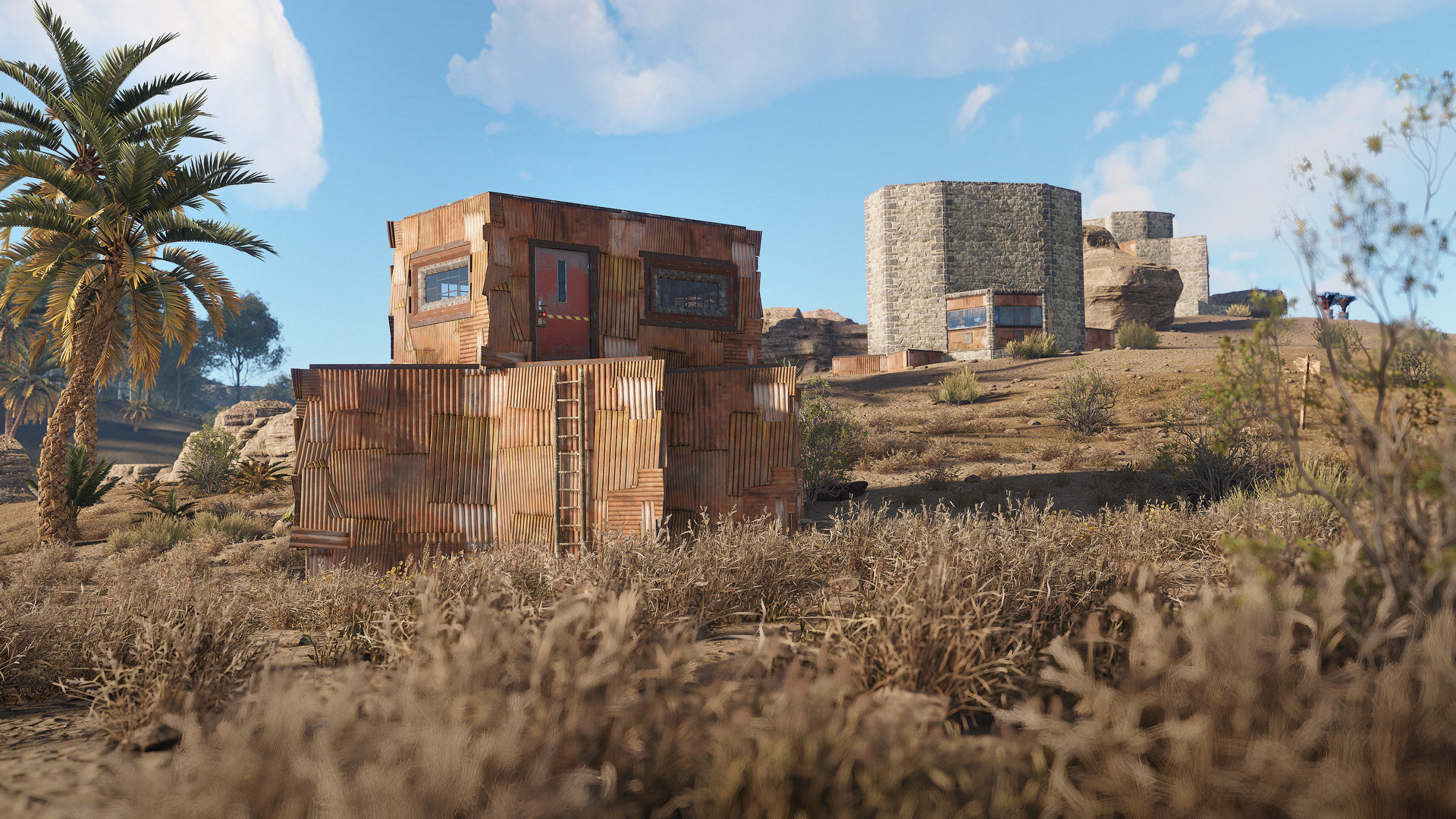
Desert is hot and slightly sparser on resources. Less tree cover, fewer players build here. Cactus provides cloth in place of hemp. Longer runs to some monuments, but less competition for building spots.
Snow is harsh. Cold damage without proper clothing, scarce food, spread-out resources. Very few players build here voluntarily. Metal and sulfur nodes are more abundant in snow biomes than elsewhere, and the reduced competition can make it surprisingly peaceful if you manage the cold.
Building near a monument gives quick access to loot and recyclers. The closer you are, the faster you can run it and return safely. The downside is high player traffic. Players farming the same monument will pass your base constantly, increasing raid risk. Near Outpost or Bandit Camp you gain safe zone access for recycling and drone delivery. Near roads you get easy barrel runs with the same exposure trade-off.
Cliff sides and elevated terrain force raiders to approach from limited directions. If your base is on a cliff with one accessible side, you only need to defend that one direction. Rock formations can be incorporated into your base, with one side protected by an unbreakable natural obstacle.
God Rocks are specific large rock formations where you can build inside the rock. These leave only two sides raiders can attack from. The best strategy is honeycombing one side with stone or metal and creating a long door path on the other side. When building a god rock base, place your TC and loot room first in the center, then put down your outermost walls and door on the entrance side before expanding inward. This protects against TC griefing during construction.
Anvil Rocks are formations you can build on top of, giving elevation advantage. The limited foundation space means small bases. Generally not worth it without a specific plan. Icebergs in the arctic biome offer offshore building that is difficult to approach by raid base, with the added deterrent of cold water and arctic temperatures for attackers.
Caves are underground locations scattered across every map. The cave itself acts as a natural funnel: raiders can only enter through the cave entrance, so you design your base around one or a few chokepoints. Small caves have a single entrance and compact interior, ideal for solos. Medium caves have 2 to 3 entry points and more room for a larger base. Large caves have up to 5 entry and exit points with extensive interiors suitable for big groups.
The limitation is the entrance. If someone camps outside your cave you are trapped inside with one way out. Place external defenses around cave entrances to deter door campers.
Water bases are harder for raiders to reach since they need boats and cannot easily build raid bases. The significant downside is distance from all resources. Every farming run requires a boat trip to shore and back. Deep water bases are almost never worth the resource cost and are vulnerable to foundation C4 attacks. The exception is using the underwater section for hidden storage: TC placement is blocked underwater, but doors, walls, ladder hatches, and vending machines with broadcasting off can create functional underwater bunkers.